Challenge
The organization relied heavily on manual reporting processes. Teams spent significant hours each week pulling data from multiple sources, cleaning it in spreadsheets, and compiling reports manually. This process was not only time-consuming but also prone to human error, leading to inconsistent reporting and delayed decision-making.
Context
This challenge existed in a fast-paced operational environment where management needed timely, accurate data to make decisions. The reporting burden was placed on operational staff whose primary responsibilities lay elsewhere, creating a bottleneck that affected overall productivity.
Approach
- Analyzed the existing reporting workflow end-to-end to identify repetitive steps and data sources
- Mapped data flows from source systems through transformation to final reports
- Identified opportunities for automation at each stage of the pipeline
- Designed a scalable architecture connecting SQL databases directly to Power BI
- Implemented scheduled refresh and automated report distribution
Solution
Built automated SQL-to-Power BI reporting pipelines that eliminated the need for manual data extraction, cleaning, and report compilation. The solution included:
- Optimized SQL queries for efficient data extraction from operational databases
- Power BI data models with DAX calculations for consistent metric definitions
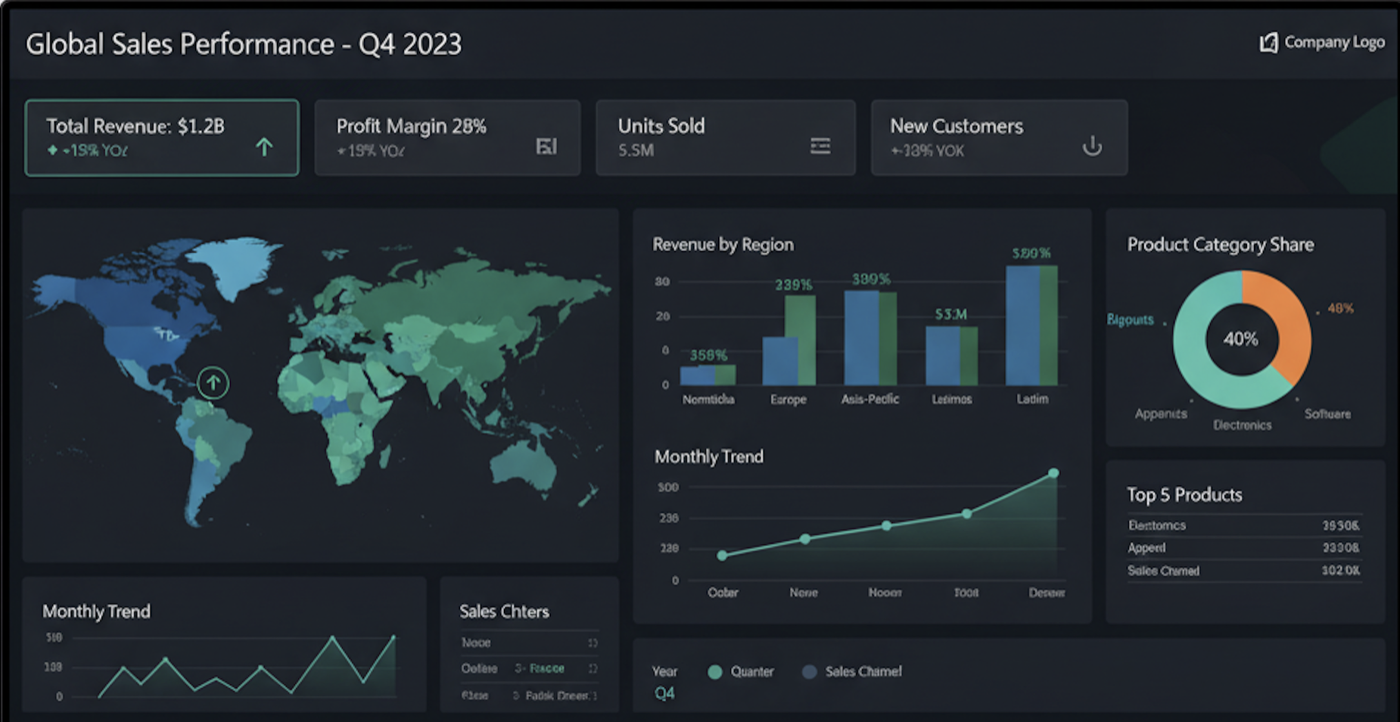
- Interactive dashboards replacing static spreadsheet reports
- Scheduled data refresh ensuring reports always reflect current data
- Automated report distribution to stakeholders
Technology
Outcome
85% reduction in reporting time. The automated pipeline eliminated hours of manual work each week, reduced errors, and ensured that management always had access to current, accurate data. Operational staff were freed to focus on their primary responsibilities instead of report preparation.